 Campaign Sprint
 Naughty Nectar
From Logo to Living Brand:
How 3D Character Animation
Is Replacing Static Identity
How 3D Character Animation
Is Replacing Static Identity
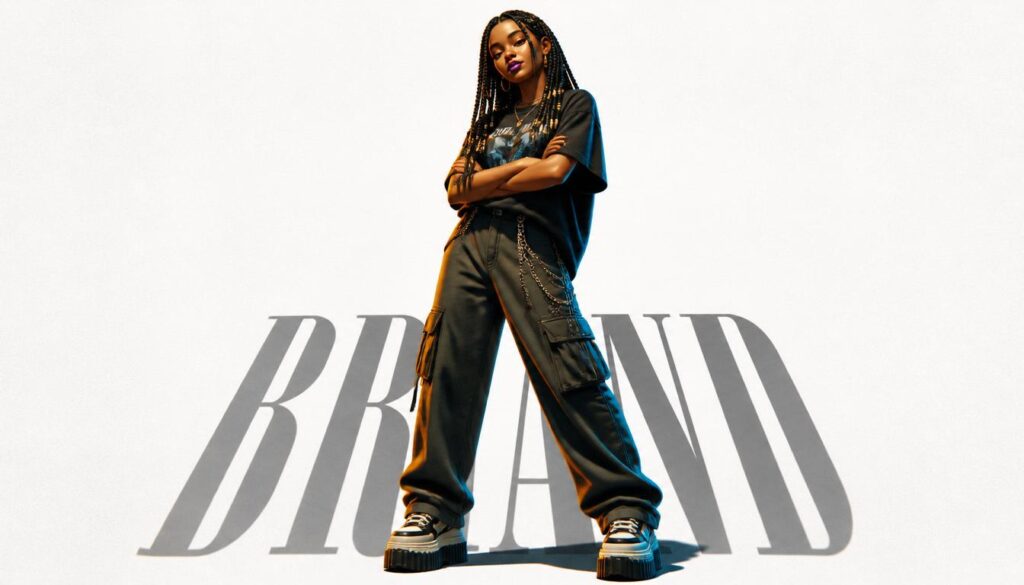
There was a time when a well-designed logo, a consistent colour palette, and a clean typeface were enough to build a recognisable brand. That time is over.
In 2026, the brands cutting through the noise aren't the ones with the sharpest visual systems — they're the ones with characters people actually remember. A mascot that reacts on social. A 3D character that guides you through a product page. A brand persona that shows up consistently, expressively, and memorably across every touchpoint your audience scrolls through.
This isn't a trend. It's a structural shift in how brand identity works — and it's being driven by 3D character animation. Here's what's behind it, what it means for your brand, and why the smartest move right now is to understand it before your competitors do.
The core shift
A logo tells people what your brand is called. A character tells people who your brand is. In an era of 3-second attention windows and personality-driven content, that distinction is the difference between being recognised and being remembered.
Static Identity vs. Living Identity: What's Actually Changed
Traditional brand identity is built around consistency of appearance — same colours, same fonts, same logo placement across every surface. It's designed to be recognisable. And for a long time, that was enough.
But static identity has a ceiling. It can be recognised. It can't be felt. It can't react, celebrate, joke, or empathise. It can't stop a thumb mid-scroll. And in a media environment now dominated by personality-driven content — creators, podcasters, YouTube hosts — a brand that communicates only through visual guidelines is playing the game with one hand tied behind its back.
Living identity changes the equation entirely. It gives a brand behaviour, not just appearance. When Duolingo's owl goes unhinged on social media, that's not a one-off stunt — it's a character with a defined personality operating across contexts, consistently. When a brand character guides users through an onboarding flow, it's doing emotional work that no colour swatch ever could. That's the gap 3D character animation fills — and why brands that get there first own the emotional territory in their category.
Static Identity
- Logo, colours, typefaces
- Consistent appearance across surfaces
- Recognisable at a glance
- Passive — it exists, it doesn't act
- Works well in print and formal contexts
- Hard to adapt to social-first formats
Living Identity
- Character, personality, behaviour
- Expressive across every context
- Memorable through emotional connection
- Active — it communicates, reacts, engages
- Built for social, digital, and interactive media
- Scales across animation, ads, packaging, UX
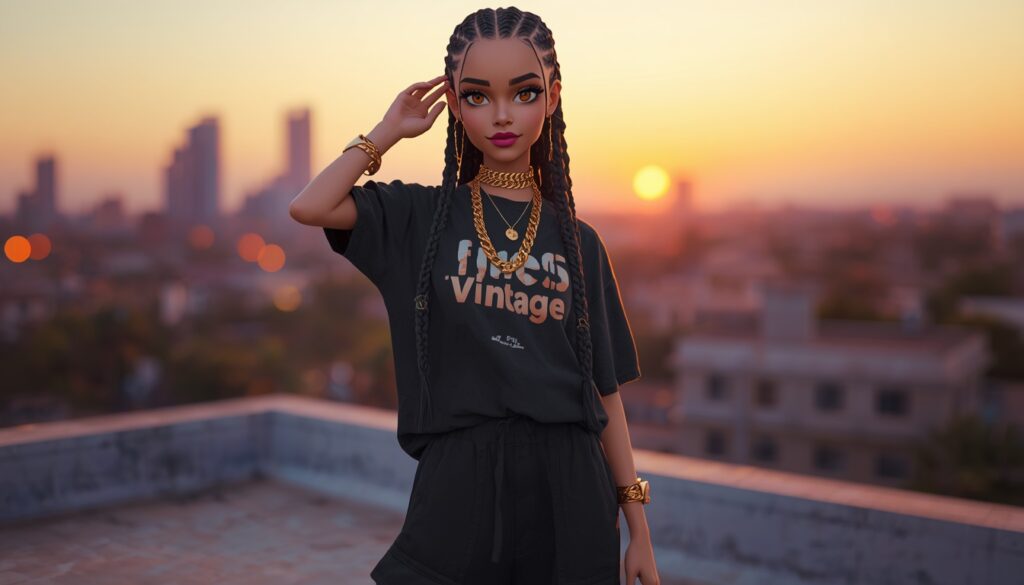
Why 3D — Specifically — Is Doing the Heavy Lifting
Not all character animation is equal. Illustrated mascots and flat 2D characters have their place, but 3D unlocks a level of expressiveness, scalability, and production utility that flat design simply can't match.
A fully modelled 3D character can be relit for every campaign, reposed for every format, and re-rendered for every platform — from a thumbnail to a billboard. The character doesn't change. The context does. That's creative scalability that a static logo or 2D illustration can't provide, and it's the reason brands that invest in 3D characters rarely go back.
"In 2026, the question isn't 'What does your brand look like?' It's 'Who is your brand — and how do they move?'"
— The Rise of the Mascot-Driven Brand, ArtMiker 2026What a Living Brand Character Actually Looks Like in Practice
A 3D brand character isn't just a mascot sitting on a page. Built properly, it becomes the most versatile creative asset your brand owns. Here's what that looks like when it's done right:
Personality before polygons. The best brand characters don't start in 3D software — they start with a brief. What does this character believe? How do they speak? What energy do they bring to a product launch versus a complaint? Personality drives design, not the other way around.
Expressive facial rigging. A character that can't convey emotion is decoration. The facial rig — the underlying system that drives expressions — is what separates a memorable brand face from a hollow 3D object. Surprise, confidence, warmth, mischief: these are brand communication tools, not artistic details.
A modular pose and asset library. Once the character is built, you construct a library of approved poses, expressions, and props. Your social team, ad team, and web team all draw from the same pool. Brand consistency without every piece needing a full production cycle.
Platform-ready rendering variants. The same character needs to work at Instagram square, YouTube thumbnail, website hero, email header, and digital billboard scale. Versatility from the start is what separates a professional 3D asset from an expensive one-use render.
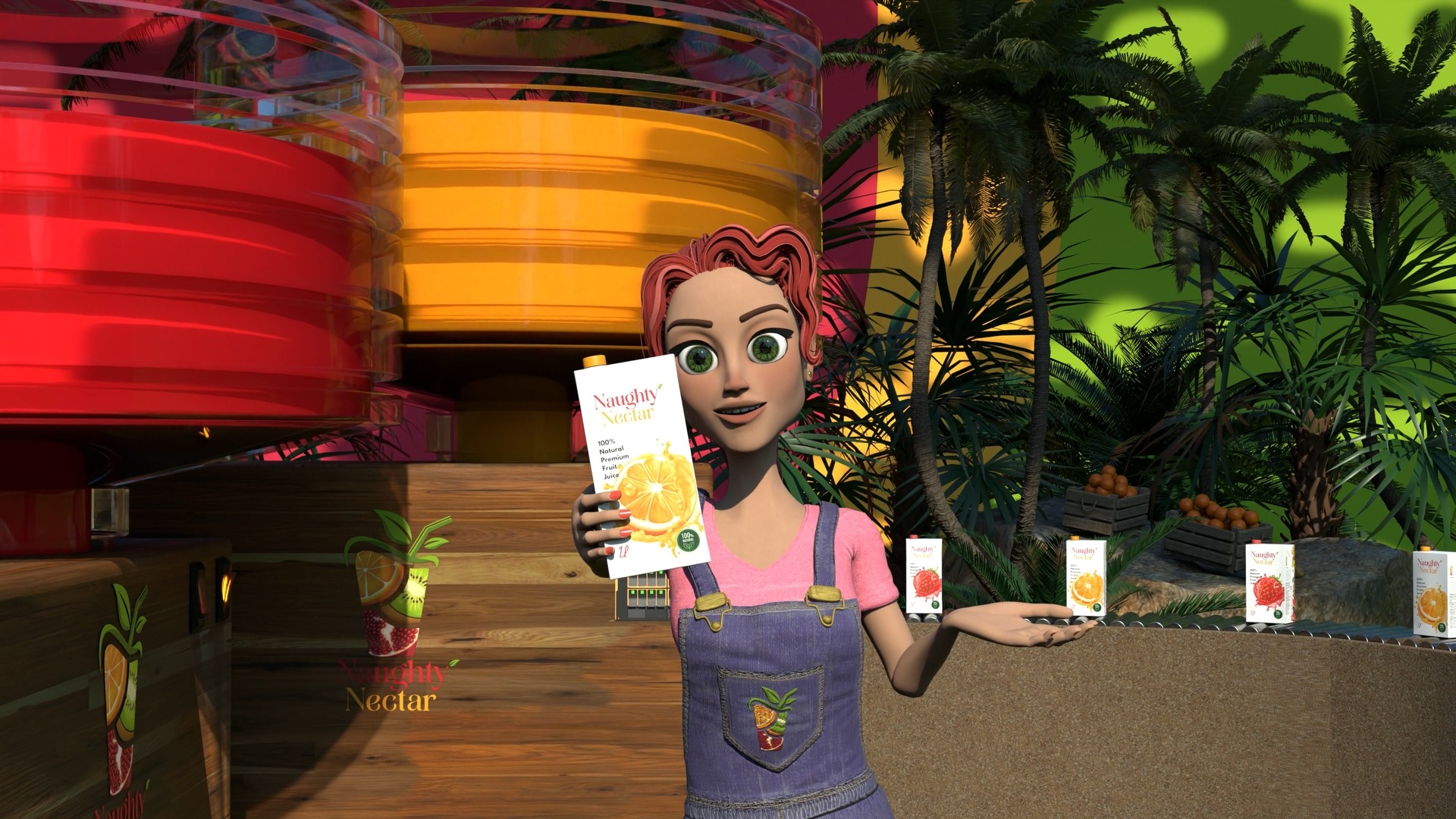
Naughty Nectar — when a brand's personality finally matched its product
Naughty Nectar came in with a clear brand voice — playful, punchy, unapologetically fruity — but nothing visual to back it up. What followed was a full identity build: logo system, 3D character design, motion ads, and a social campaign to launch across platforms. The brief wasn't "make something nice." It was "make something that bites back." That's the kind of brief a living brand character is built for.
See the full Naughty Nectar project →Where Living Identity Wins — Every Single Time
There are five places where character-led brands consistently outperform brands relying on static identity. Each matters on its own. Together, they represent the entire modern marketing stack:
Social media. Algorithms reward personality. A character doing something — reacting, celebrating, narrating — will always outperform a product photo with a logo watermark. Motion is inherently more engaging, and a character gives you infinite motion possibilities without rebuilding the creative concept from scratch.
Paid advertising. Creative fatigue is one of the biggest threats to campaign performance. A 3D character gives you variation — the same message delivered in ten different poses, expressions, and scenarios — without rebuilding from zero each time. You're not recycling creative. You're expanding it.
Product and app UX. Characters used inside products — guiding onboarding, celebrating milestones, softening error states — measurably reduce friction and increase completion rates. A character does emotional regulation that interface design alone simply cannot.
Brand storytelling. A character can be placed in any narrative context. They can travel, fail, grow, and win. That's the foundation of long-form brand storytelling — the kind that builds genuine cultural resonance over years, not just quarters.
Recognition over time. Logos change. Typography trends. Brand guidelines get refreshed every few years. But a well-crafted character becomes an institution. Colonel Sanders. The Michelin Man. Duolingo's owl. These aren't marketing executions — they're brand equity that compounds with every appearance.
The scalability argument: Once your 3D character exists, every new campaign brief starts from a position of creative strength. You're not building a visual identity from scratch — you're directing a character you already own. The cost per asset drops significantly over time. The brand recognition compounds. It's one of the most efficient investments a growing brand can make.
Get in touch with us
Is a Living Brand Right for You? A Quick Reference
Not every business needs the same depth of character development — the right entry point depends on where you are and what you're trying to do. This should make it easy to see where you fit:
| Business type | What you actually need | Starting point | Fit |
|---|---|---|---|
| Consumer brand (FMCG, food, drinks) | A character that owns your category and drives campaign-to-campaign recognition | Brand mascot creation | Essential |
| Retail & e-commerce | A product-forward character that guides, recommends, and carries brand personality | Mascot + explainer animation | Essential |
| SaaS & tech platforms | An in-product character that reduces onboarding friction and humanises the interface | 3D character + product animation | High value |
| Professional services | Motion identity and explainer animation that simplifies complex offerings | Explainer or campaign animation | Strong fit |
| Game studios & entertainment | Full character production: modelling, rigging, animation, in-engine integration | Character production pipeline | Essential |
| SMEs & growing brands | A fast-turnaround package that delivers a character and campaign-ready assets together | The Campaign Sprint | Best entry point |
| Corporate & internal comms | Training animation and internal narrative characters that make content stick | Corporate training animation | Situational |
If you're an SME or a brand just getting started with 3D — the Campaign Sprint exists for this moment
It's a focused, short-turnaround package: character creation, campaign assets, and social-ready video ads, all built together under one brief. No sprawling scope, no open-ended timelines. You get a 3D character and a working campaign out the other side — which is how most brands should probably start anyway. We built it after noticing that the brands who needed this most were often put off by the idea of a long production engagement. The sprint removes that barrier.
See how the Campaign Sprint works →The Brands That Wait Are Ceding Ground
Here's the uncomfortable reality: the window to be first in character-led branding within your category is already narrowing. The brands that move now will own the emotional position in their market. The ones that wait will be building characters to compete with characters that already have years of audience recognition behind them.
This isn't a technology argument. It's a market position argument. 3D character animation has reached a point where production quality is no longer the primary barrier — the barrier now is simply the decision to move.
The brands that understood this earliest didn't do it because they had the biggest budgets. They did it because they understood that brand identity was no longer a design brief. It was a casting brief. The question stopped being "what should our logo look like?" and became "who should our brand be?"
The shift is already well underway. Motion brand guidelines, mascot-first social strategies, character-led product UX — these aren't future trends being debated in strategy sessions. They're current deliverables being briefed into studios right now. The brands that get there first claim the emotional territory. The ones that follow spend years and significant budget trying to close the gap.
At Hambapixel, this is what we do — build brand characters designed to carry a brand's personality, scale across every platform, and compound in value with every campaign they lead. If you're curious what that could look like for your brand, the Campaign Sprint is probably the most honest place to start — or just reach out and we can talk it through before anything is decided.
Ready to start your project?
hambapixel.com · Studio & freelance 3D

Kael Mercer

Why AI-Generated 3D Still Can’t Match a Human-Made Character Every few weeks a founder or marketing lead lands in my inbox with …
Custom 3D Character: Make Your Website Impossible to Ignore. Your visitor decides whether to stay or leave in about the time it …
From Logo to Living Brand: How 3D Character Animation Is Replacing Static Identity There was a time when a well-designed logo, a …
You’re paying for attention you’re not keeping. 105 Views South Africa has one of the highest small business failure rates on the …